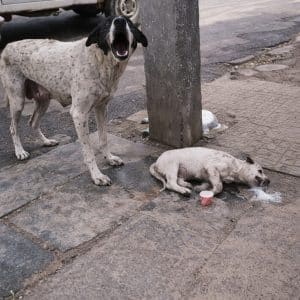
Alan’s life began with a kind of hardship no animal should ever endure. Long before anyone knew his name, he was already learning what it meant to survive without care. His world was small, harsh, and lonely—defined by a heavy chain, empty days, and the slow weakening of a body that had been forgotten.
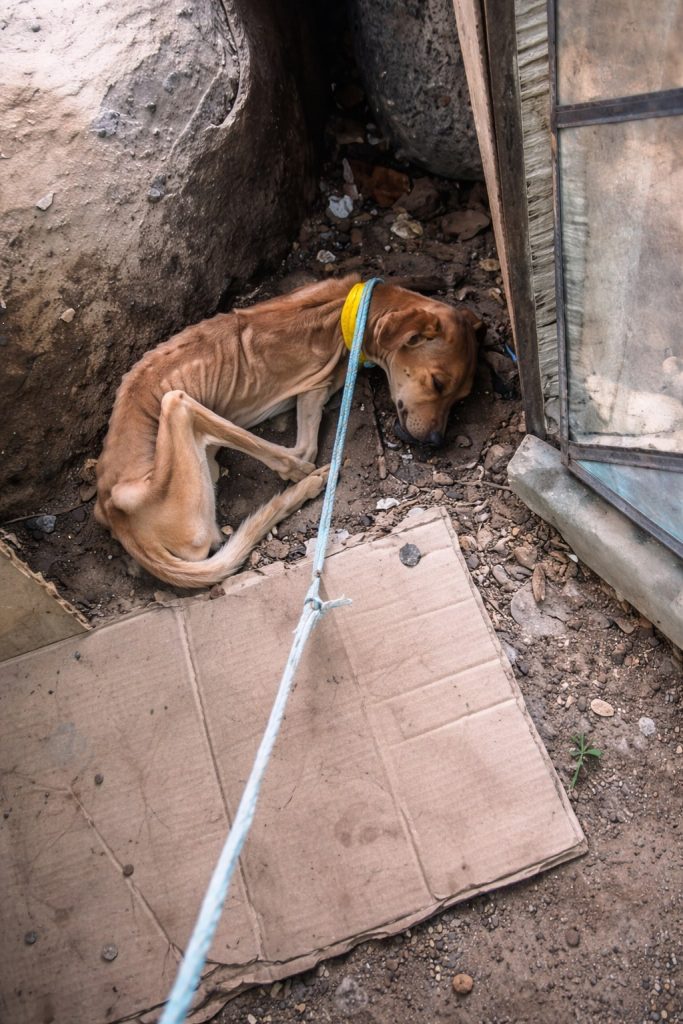
The first sign that something was terribly wrong came through a concerned call. Someone nearby could no longer ignore what they were seeing. A dog had been left outdoors, chained in place, growing thinner and weaker with each passing day. There was no shelter, no food, and no sign that anyone was looking after him.
When rescuers arrived, the reality was devastating. Alan stood barely upright, his body frail and exhausted. His ribs showed clearly beneath his skin, and every movement seemed to take effort. The chain around his neck told the story without words—weeks of abandonment, exposure, and neglect. Yet when the rescuers approached, Alan lifted his head. Even in that condition, he seemed to hope that help had finally come.
The situation became even more disturbing when a man appeared, claiming Alan belonged to him. What he said next revealed everything. He admitted that he had bought Alan cheaply during a time when the breed was popular. When interest faded, so did his sense of responsibility. Alan had been left behind without hesitation, treated as something disposable once he was no longer wanted.
Despite the resistance, rescuers were able to remove Alan and rush him to a veterinary clinic. There, the full extent of his condition became clear. Weighing only 6.5 kilograms, Alan was dangerously undernourished. His blood sugar levels were critically low, and his body showed signs of prolonged neglect. He was weak, unstable, and at serious risk—but his eyes still held a quiet determination to live.
VIDEO: From Abandonment to a New Life — Alan the Dog’s Journey to Recovery
The veterinary team acted quickly. Alan was placed under constant observation and given medication to stabilize his condition. Insulin therapy was introduced with extreme care, and his nutrition was reintroduced slowly to protect his fragile system. For the first time in a long while, Alan was somewhere safe. The clinic became a place where he could finally rest without fear.
The first nights were critical. Staff monitored him closely, adjusting treatment with every small change. Recovery did not come suddenly, but it came steadily. Each hour without setback felt like a small victory. Through it all, Alan remained calm and cooperative, responding gently to the people caring for him.
Within days, signs of improvement began to appear. His eyes grew more alert. He showed interest in food and accepted nourishment with growing confidence. Standing became easier. Strength returned slowly, but noticeably. What surprised everyone most was his temperament. Despite everything he had endured, Alan was affectionate and trusting, eager for human connection.
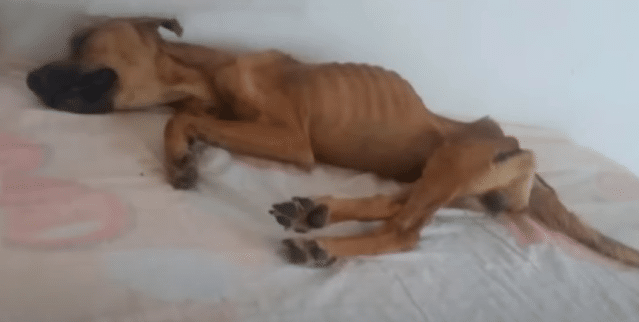
As his body healed, his spirit followed. He began exploring his surroundings, greeting caregivers with curiosity instead of fear. Small moments—a wagging tail, a soft look—carried deep meaning. They were signs that Alan was not just surviving, but healing.
Those who cared for him spoke often about the impact of his recovery. Watching a dog regain trust after such betrayal was deeply moving. Alan carried no bitterness. Instead, he offered affection freely, reminding everyone that animals are capable of extraordinary forgiveness when met with patience and kindness.
Alan’s journey highlighted an important truth. His suffering was caused by irresponsible ownership. His survival, however, was made possible by people who refused to look away. Quick action, professional care, and unwavering compassion gave him a second chance he should never have had to fight for.
With continued treatment, Alan’s health stabilized. He gained weight. His energy returned. The dog who had once been chained and forgotten became playful, alert, and full of life. The transformation was impossible to miss.

Eventually, Alan moved into a home where he was truly valued. Surrounded by routine, affection, and consistency, he continued to thrive. His days were filled with safety and comfort—things that had been completely absent from his early life. The contrast was profound.
Alan’s story is about more than one dog’s recovery. It is a reminder that animals are not trends or temporary possessions. They depend on us entirely, trusting us with their lives. When that trust is broken, the consequences are devastating. But when compassion steps in, healing becomes possible.
Today, Alan lives far removed from the suffering he once knew. He is cherished, protected, and deeply loved. His journey stands as proof of what rescue can accomplish—and why it matters. Alan did not just survive. He rediscovered joy, trust, and belonging.
His story reminds us that when we choose empathy over indifference, we change lives. And sometimes, as Alan’s journey shows, we save them.