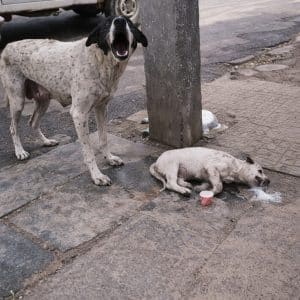
On a calm, unremarkable day in a quiet part of Lara, Venezuela, a rescue team came across a sight that would stay with them forever. In the middle of an ordinary street stood a small dog who looked as though life had slowly drained out of him. He didn’t react when footsteps approached. He didn’t bark, whine, or try to run. He simply stood still, frozen in place, as if even the act of moving had become something to fear. That silence spoke louder than any cry for help ever could.
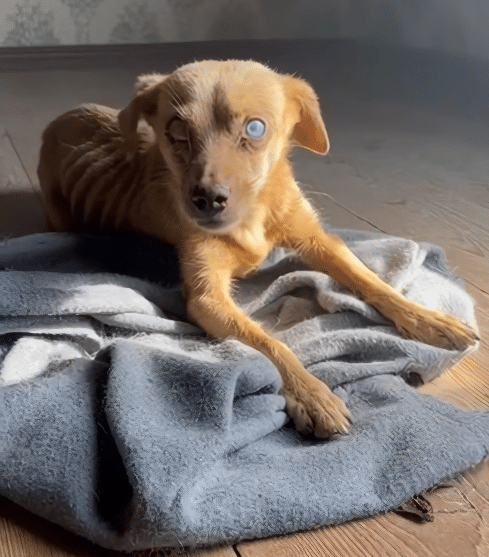
The dog would later be named Benki.
At first glance, it was clear that Benki’s condition went far beyond a single injury or recent hardship. He was blind, his eyes clouded and unresponsive to light or motion. One of his hind legs was missing entirely, forcing him to balance his small body in an awkward, careful stance. His fur was dull and patchy, his frame thin from prolonged neglect. Yet what struck the rescuers most wasn’t just what they could see—it was the way Benki seemed to have accepted his suffering, as though he had learned long ago that being noticed rarely led to kindness.
As the team gently approached, they realized how deeply broken his trust was. Sudden sounds caused his body to tense. Unfamiliar movements sent him into quiet panic. He didn’t growl or snap. Instead, he let out soft, frightened cries, the sound of a dog who didn’t understand what was happening but feared the worst. It was immediately clear that helping Benki would require far more than medical care. His wounds ran deeper than skin and bone.
Veterinary examinations confirmed what many suspected. Benki’s injuries and physical condition did not happen overnight. The patterns suggested a life spent being used rather than loved. Professionals believed he had likely been part of a breeding operation, valued only for what he could produce and discarded once he was no longer useful. It was a devastating conclusion, but there was also unexpected hope hidden within the diagnosis. Despite everything his body had endured, his vital organs were strong. His heart was healthy. He was battered, but he was still alive—and still capable of healing.
Video From Broken to Beloved: Benki’s Quiet Journey Back to Trust
In the early days, treatment focused on stability and comfort. But the rescue team quickly realized that pushing too fast would only deepen Benki’s fear. Instead of rushing procedures, they chose patience. They sat beside him for hours, speaking softly so he could learn their voices. They moved slowly, letting him sense their presence before touching him. Each interaction was deliberate and gentle, designed to show him that hands could bring comfort instead of pain.
Those first nights were the hardest. Blind and disoriented, Benki often cried when the world around him shifted. New smells, new sounds, and unfamiliar routines overwhelmed him. But someone was always there. A calm voice. A reassuring touch. A steady presence that never disappeared. Slowly, almost imperceptibly, Benki began to relax.
After about ten days, something remarkable happened. Benki started responding to verbal cues. When caregivers spoke, he paused instead of panicking. He turned his head toward familiar voices. He began following sounds, trusting that they would lead him somewhere safe. These changes may have seemed small, but for a dog who once stood frozen in silence, they were enormous. They meant he was beginning to feel secure.
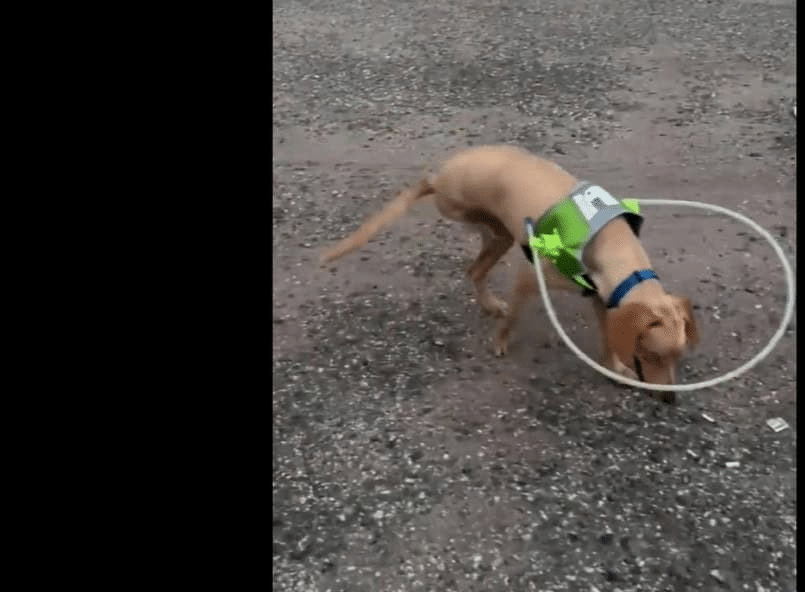
As weeks passed, Benki’s world expanded beyond the small space where he had first taken refuge. With guidance, he ventured into new areas, mapping his surroundings through sound and scent. His movements were slow and cautious, but each step carried growing confidence. Fear no longer controlled every moment. Curiosity began to take its place.
To help him navigate more safely, caregivers introduced protective eyewear designed for visually impaired dogs. The difference was subtle at first, but powerful. With less fear of bumping into obstacles, Benki began moving more freely. His posture softened. His body relaxed. He started exploring not because he had to, but because he wanted to.
Recovery brought new challenges. Limited mobility meant Benki initially gained weight, which could have caused further strain. Instead of restricting him, the team adapted activities to fit his abilities. Gentle walks guided by voice. Simple exercises to strengthen his remaining leg. Play sessions that engaged his mind without overwhelming his body. These routines gave Benki more than physical strength—they gave him purpose.
What amazed everyone involved was Benki’s resilience. After years of neglect and abandonment, he still had the capacity to trust. He leaned into gentle hands. He rested calmly near those he recognized. The frightened dog who once stood motionless now sought connection. His personality began to shine through—a quiet, affectionate presence that asked for nothing more than safety and consistency.

Benki’s transformation was not fast or dramatic. There were no instant miracles. Instead, it was built day by day through patience, respect, and unwavering care. Each small victory mattered: a relaxed breath, a confident step, a soft tail wag. Together, they formed a powerful story of healing.
Today, Benki stands on the edge of a new chapter. He is ready for a permanent home with people who understand that love sometimes requires adjustment and patience. His needs may be different, but his ability to give affection is extraordinary. He has learned to trust again, to feel safe, and to enjoy life on his own terms.
Benki’s story is a reminder that worth is not measured by perfection or usefulness. Once treated as disposable, he now represents resilience, dignity, and hope. His journey proves that even after severe neglect, healing is possible when compassion leads the way.
Now surrounded by care and kindness, Benki’s life is no longer defined by what he lost, but by what he gained—a second chance, a voice that listens, and a future shaped by trust rather than fear.