A Chance Meeting on the Open Road
Wang had been cycling across China, heading toward Tibet — a journey that demanded strength, endurance, and solitude.
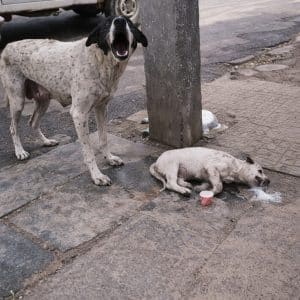
Somewhere along a quiet road in Inner Mongolia, he noticed movement near the roadside.
A stray dog.
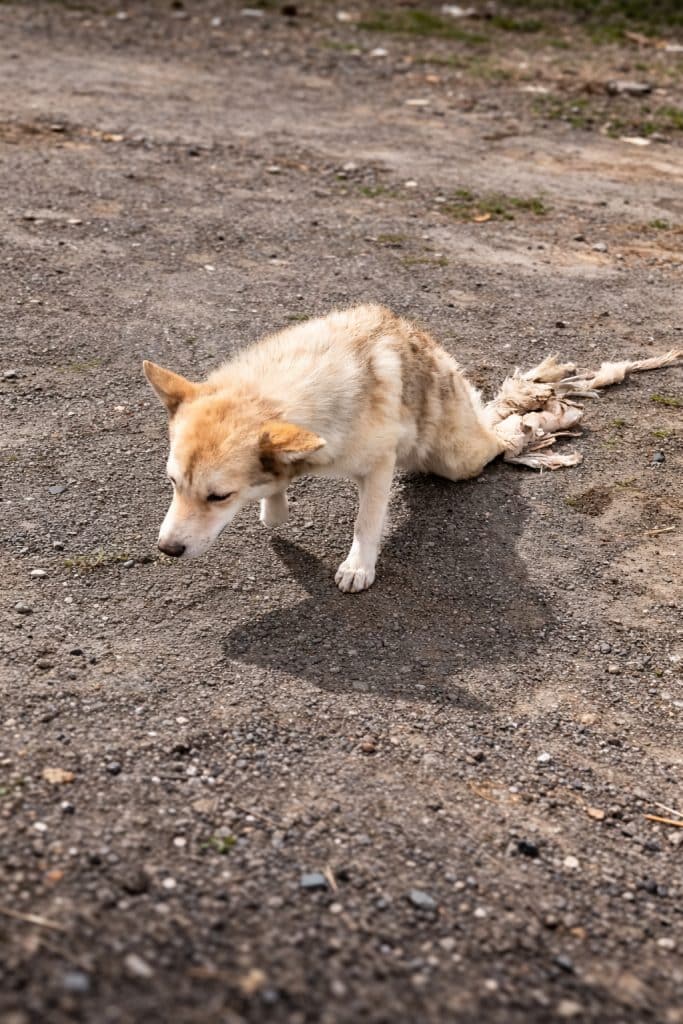
Thin.
Dragging himself forward.
His back legs wrapped in old bandages.
He could not move them at all. He pulled his body across the ground, inch by inch.
Wang stopped.
He offered biscuits.
Water.
The dog did not bark. He simply looked up — tired, uncertain, but hopeful.
That was the moment everything shifted.
Choosing Not to Ride Away
Taking a disabled dog on a long-distance cycling expedition was not practical.
The terrain ahead included desert heat, high mountains, and thin air at extreme altitude.
But after checking the injuries and seeing no one else stepping forward, Wang made a decision.
He would not leave him.
He named the dog Bitter Gourd — a name symbolizing hardship at first taste, but sweetness after endurance.
If the beginning had been bitter, perhaps the rest of life could be gentle.
Video: From the Roadside to Everest Base Camp — The Journey of Wang and Bitter Gourd
The journey that followed would test them both.
Healing on the Move
Before continuing toward Tibet, Wang brought Bitter Gourd to a veterinary hospital.
The diagnosis was difficult but clear.
Severe nerve damage in the hind legs.
Irreversible.
Surgery would not restore movement.
Medication and supportive care were the path forward.
So Wang became more than a traveler — he became a caregiver.
Each day he cleaned the wounds carefully.
Applied medicine.
Massaged the lifeless legs with quiet patience.
He prepared nutritious meals himself — chicken breast, simple but nourishing food — to help Bitter Gourd regain strength.
And the dog responded.
He cooperated.
He trusted.
He sat calmly atop the luggage rack behind Wang’s bicycle, riding across the vast Gobi Desert and into mountain passes that touched the clouds.
Across Deserts and Into the Sky
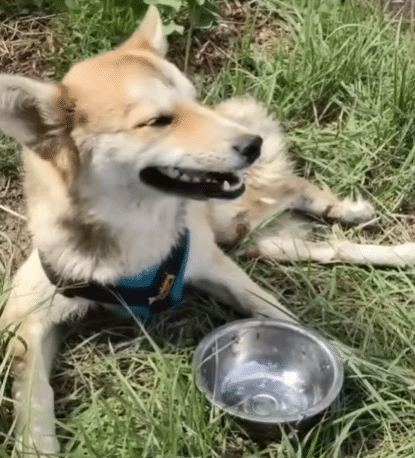
Together, they crossed terrain few would attempt.
They reached a rest stop at 4,909 meters.
They continued to Everest Base Camp at 5,200 meters.
Thin air.
Freezing winds.
Blazing sun.
Through it all, Bitter Gourd remained by Wang’s side — perched behind him like a quiet companion.
Strangers along the road began recognizing them.
A cyclist and a paralyzed dog.
They watched sunsets in Tibet.
They witnessed snowfall.
They paused beside mirror-like alpine lakes.
Eventually, they arrived safely in Lhasa.
Not as rescuer and rescued.
But as partners.
Home Is More Than a Destination
When the expedition ended, Wang did not part ways with Bitter Gourd.
He brought him home — by plane.
There, a new chapter began.
Wang built him a two-story wooden house, carefully crafted and warm.
He purchased a wheelchair designed for mobility support.
And Bitter Gourd adapted quickly.
Soon, he was running with the wheels.
Turning confidently.
Exploring freely.
No longer dragging himself along gravel roads.
But moving forward with dignity.
A Birthday and a Promise Kept
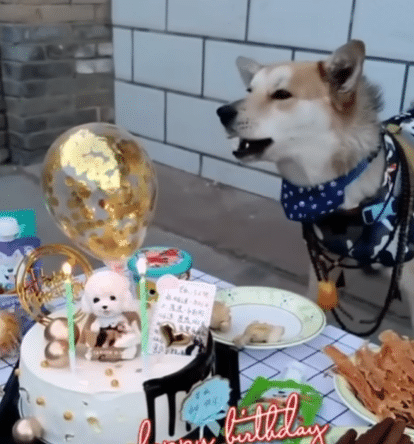
One year after that roadside meeting, Wang celebrated Bitter Gourd’s birthday.
There were decorations.
A small cake.
A dog who once lay helpless in dust now surrounded by warmth.
From a paralyzed stray on a lonely highway to a beloved companion who stood at Everest Base Camp.
His life did not become easier.
But it became fuller.
What This Journey Teaches Us
Sometimes the greatest journeys are not the ones mapped out in advance.
Wang set out to conquer distance.
Instead, he chose compassion.
Bitter Gourd could not move his back legs.
But he carried something far more powerful.
The ability to transform a solitary road into a shared path.
And sometimes, that is the real summit.