Too Small to Cry for Long
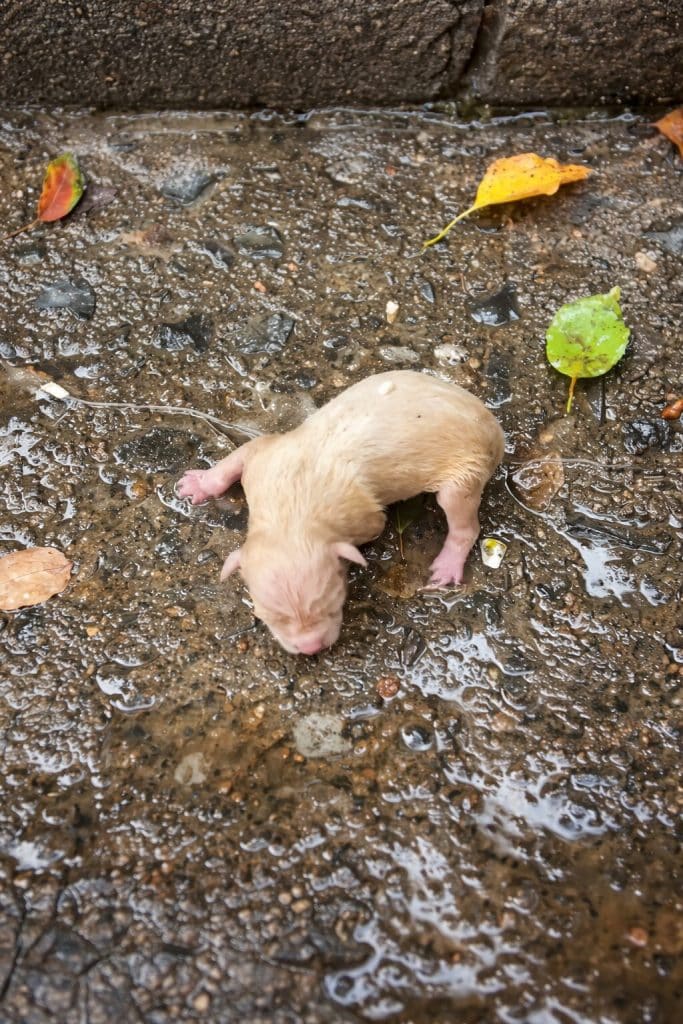
He was discovered lying on a sidewalk, barely moving.
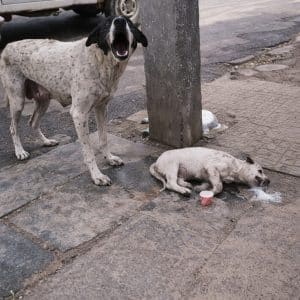
A newborn puppy, eyes still closed, body weak and unsteady. His fur was matted with dirt. He smelled of neglect and exposure. There was no mother nearby. No warmth. No protection.
He had not yet learned what the world was.
And already, it had left him alone.
The rescuer did not hesitate.
She carried him home, bathed him gently in warm water, and prepared what he would need to survive — milk formula, a feeding bottle, a heating pad to replace the warmth he had lost.
He was so small that one hand could hold him entirely.
Learning to Live, One Drop at a Time
The first days required constant care.
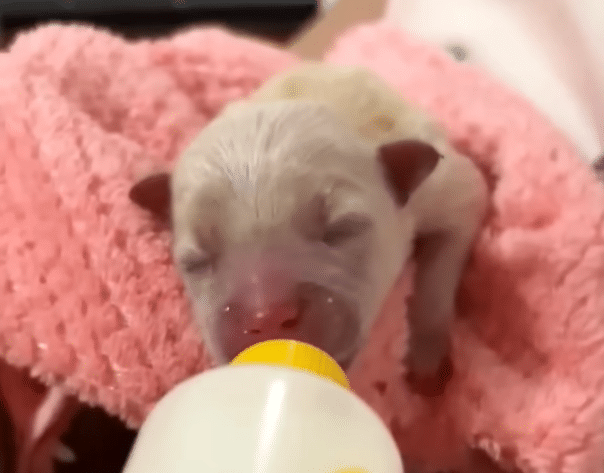
Because he was too young to feed independently, the rescuer patiently taught him to drink from a bottle. Every few hours, day and night, she fed him slowly.
Newborn puppies cannot relieve themselves alone, so she used a soft cotton pad to gently stimulate him — a small but essential act that mothers usually provide.
Sleep came in short intervals.
There was no routine yet.
Only vigilance.
Video: Found Before He Opened His Eyes — Watch the Tiny Fighter Who Refused to Give Up
Just when stability seemed possible, everything changed.
Day Five — The Diagnosis No One Wanted
On the fifth day, he suddenly grew weak.
Severe diarrhea followed. His tiny body lost strength quickly. He stopped moving as much. His appetite faded.
At the clinic, the diagnosis was devastating.
He had contracted Parvovirus and Coronavirus — both highly dangerous for puppies, especially those under ten days old. Survival rates at that age are heartbreakingly low.
The treatment plan was immediate and aggressive.
Daily injections.
Careful monitoring.
Strict hygiene.
Constant hydration.
Every day became a battle.
Fighting With What Little Strength He Had
Despite the discomfort and exhaustion, he continued trying to drink milk. Even in weakness, his instinct to live remained.
He endured each injection quietly. His body was fragile, but his will was not absent.
For seven days, the treatment continued.
Seven days of uncertainty.
Seven days where each small improvement felt monumental.
Then, gradually, the symptoms eased.
His energy returned in small flickers.
His body stabilized.
The worst had passed.
He had survived.
Growing Into His Name
By day ten, he attempted his first unsteady steps.
By day fifteen, his eyes opened to the world for the first time.
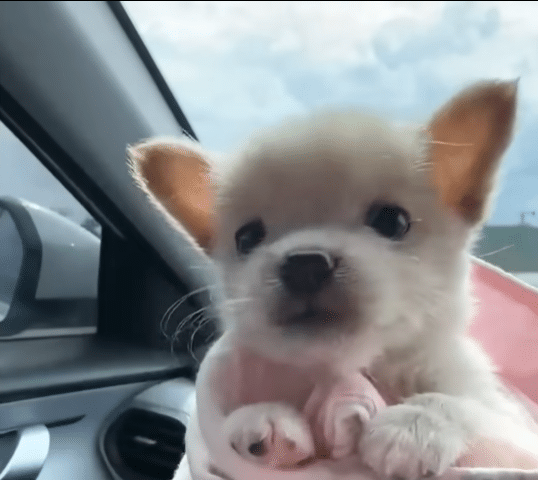
And by days twenty to thirty, he had transformed into a lively, curious puppy — teething, exploring, transitioning to soft solid food.
He was no longer the silent newborn on cold pavement.
He had become vibrant.
He was given a name: A Gan — a phrase meaning that after bitterness comes sweetness.
It fit.
Because his life had begun in hardship, but it did not end there.
A Future No One Could Have Promised
Today, A Gan is playful and energetic.
He runs.
He explores.
He seeks affection without fear.
The heating pad is gone.
The bottle is no longer needed.
The daily injections are a memory.
What remains is growth.
And gratitude.
What A Gan’s Story Reminds Us
Sometimes, rescue begins before a life has even begun.
It begins with midnight feedings.
With cotton pads and warm towels.
With refusing to accept a discouraging prognosis.
A Gan was found before he ever opened his eyes.
Now he sees a world filled with care.
His story proves something powerful:
Even the smallest heart can fight.
And when given warmth, patience, and love — even the most fragile beginnings can turn into something bright.