It was a scorching summer day when someone noticed a small figure trembling under an abandoned metal basin by the roadside.
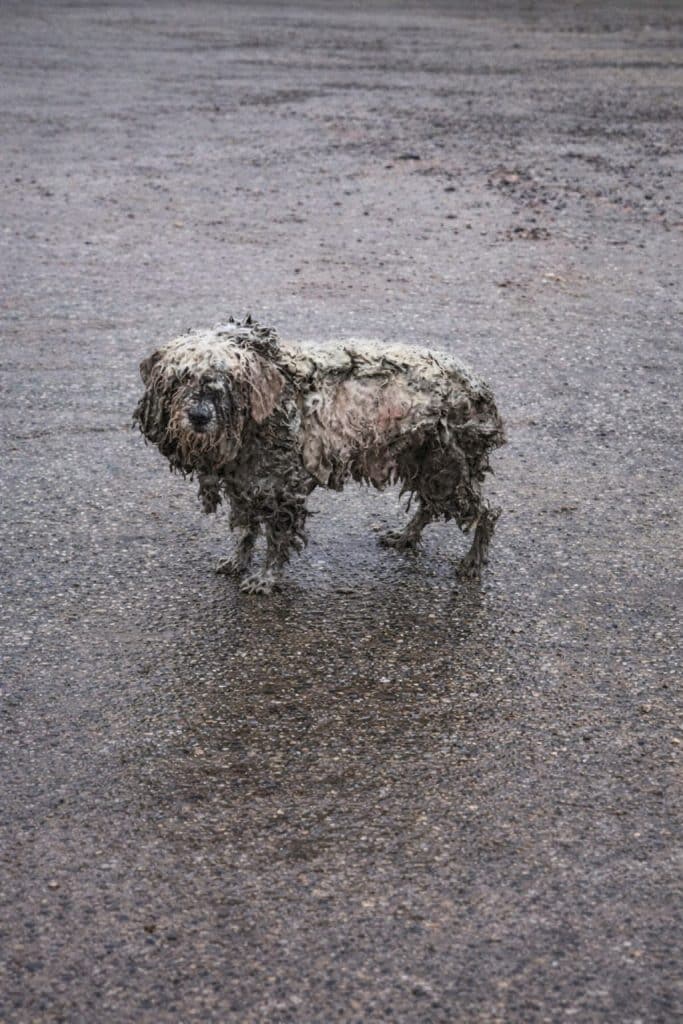
At first glance, it barely looked like a dog.
His body was skeletal — just skin stretched tightly over fragile bones. Most of his fur had fallen out due to severe skin disease. What remained was patchy and dull. His exposed skin was red, inflamed, and painfully irritated.
He appeared to be a small mixed breed, possibly part Poodle.
He did not bark.
He did not move.
He simply shook — from fear, exhaustion, and dehydration.
He had chosen that rusted basin as his hiding place, as if it were the only shield left between him and the world.
A Fragile Soul Too Afraid to Trust
When the rescuer approached, the little dog tried to shrink even smaller.
His eyes were wide, scanning for danger.
He had likely learned that humans did not always bring kindness.
The rescuer did not rush.
He placed food nearby and stepped back.
Slowly… cautiously… the dog crept forward. Hunger outweighed fear. He ate just enough to survive another hour.
Water followed.
After several patient attempts, gentle hands reached out.
This time, the dog did not run.
He was too weak to resist — but perhaps also too tired to keep fighting alone.
Carefully, the rescuer lifted him. His body felt weightless.
Video: From Hairless and Hiding to Hopeful Again
At the rescue center, immediate tests were performed.
The results were serious.
The small dog tested positive for both Parvovirus and Coronavirus — two highly dangerous illnesses, especially for an animal already severely malnourished and immunocompromised.
He was placed under intensive care.
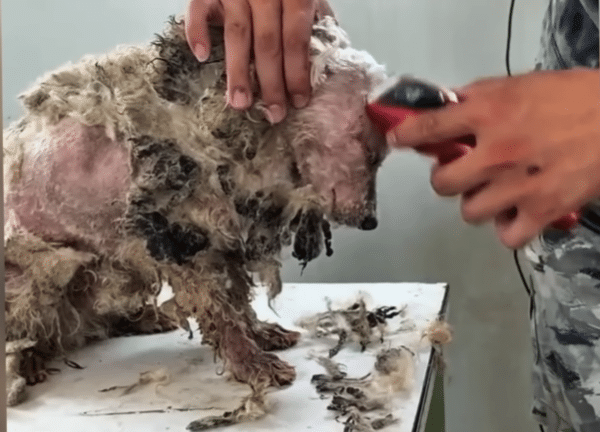
An Elizabethan collar protected his fragile skin from further injury. IV fluids were administered to combat dehydration. Medications were given to stabilize his condition. His wounds were cleaned and treated daily with specialized topical solutions.
The first days were uncertain.
He was quiet.
Still.
Watching.
But he held on.
Fighting Back, One Day at a Time
Recovery was not instant.
It required structure, nutrition, medical supervision, and something less measurable but equally powerful — reassurance.
He was fed small, nutrient-rich meals to help rebuild strength. His digestive system was monitored carefully. His skin treatment continued regularly to reduce inflammation and infection.
Then, something remarkable began to happen.
Tiny white hairs started to grow.
Soft at first.
Barely noticeable.
But they kept coming.
His eyes brightened.
His appetite strengthened.
His tail — once tucked tightly — began to move.
Just a small wag at first.
Then more confidently.
Learning to Trust Again
As his body healed, so did his spirit.
The dog who once hid beneath metal now sought out touch. He leaned into gentle strokes. He followed caregivers around the room.
He even began to play.
The same soul that once trembled in a corner was now bouncing lightly on his paws, asking for attention. He discovered joy in simple things — toys, warm baths, soft blankets.
He no longer shrank from human presence.
He welcomed it.
A Transformation Six Months in the Making
Half a year later, the change was almost unbelievable.
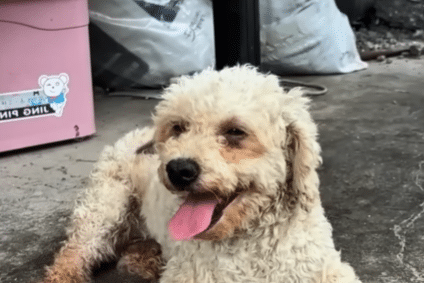
The hairless, skeletal creature had transformed into a fluffy white dog with a healthy coat and bright expression. His once irritated skin was smooth and protected by thick fur.
He ran freely.
He explored confidently.
He wore small outfits during outings to the park — not out of necessity, but celebration.
He had become playful, affectionate, and full of life.
The rusted basin was long forgotten.
What His Story Reminds Us
This journey was not defined by illness.
It was defined by perseverance.
A small dog hiding from the world was given time, care, and consistent compassion. Medical science played its role. But patience played a greater one.
Every life — no matter how fragile, how sick, how afraid — carries potential.
All it takes is someone willing to kneel down in the heat, look beneath the metal, and say:
“You matter.”
And sometimes, that is enough to begin a miracle.