The first call came with urgency.
A mother dog and her puppies had been seen near a highway. Abandoned. Exposed. Too close to speeding traffic.
The rescue team set out immediately.
But heavy rain poured down that day. Visibility was low. The roadside was muddy and scattered with debris. They searched as long as they could.
There was no sign of the family.
Reluctantly, they had to leave — hoping they would not be too late.
The Second Visit No One Was Prepared For
The next day, they returned.
This time, the rain had stopped. The road was quiet.
And that’s when they saw her.
The mother dog had been struck by a vehicle. She lay still at the edge of the highway. There was nothing left to do for her.
The team’s hearts sank.
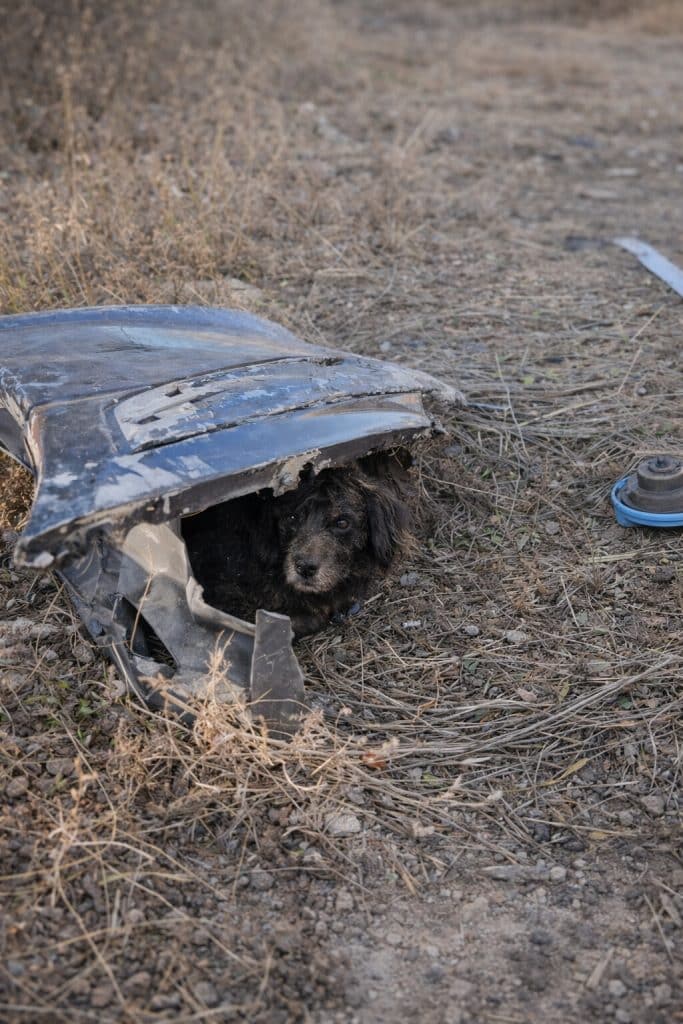
They searched frantically for the puppies, calling softly into the empty air. They checked bushes. Under broken panels. Beneath discarded trash.
Nothing.
After hours of searching, it seemed there would be no survivors.
They were about to leave.
And then something moved.
Video: The Only Puppy Left Alive Under a Pile of Roadside Debris
Some rescues happen in the final seconds.
As the team turned back toward their vehicle, they noticed the faintest motion beneath a pile of scrap and litter.
A tiny black puppy.
Wet. Shaking. Pressed tightly into the corner as if trying to disappear.
He was the only one left.
The only heartbeat still fighting.
Cold, Frightened — But Alive
The puppy was carefully lifted into warm hands.
He trembled from fear and cold. His fur was soaked. Mud clung to his fragile body. His eyes were wide, unsure whether to trust.
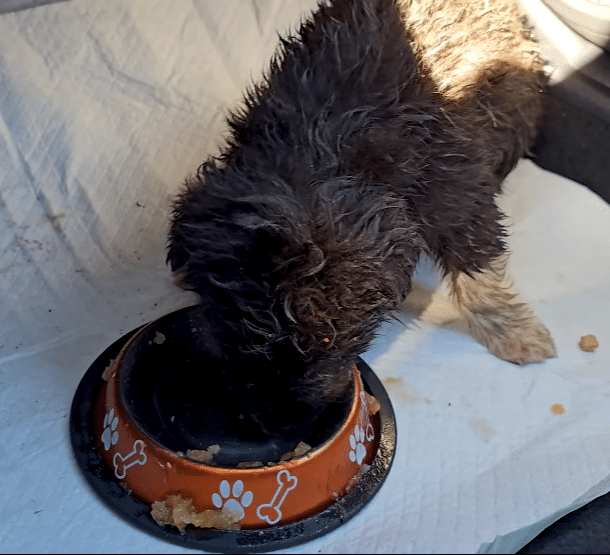
They wrapped him in blankets inside the rescue vehicle. Offered small amounts of food. Gentle reassurance.
He didn’t resist.
He simply leaned into the warmth.
A Trip to the Clinic That Brought Answers
From the roadside, he was taken straight to the veterinary clinic.
His weight was checked. His temperature measured. Blood and viral tests were performed to rule out immediate threats common in young puppies.
One issue appeared quickly — Giardia, a parasitic infection that often affects puppies living in contaminated environments.
The good news?
It had been caught early.
Treatment began immediately. Medication was administered. His system was monitored carefully. With prompt care, recovery was very possible.
The First Bath of His New Life
After leaving the clinic, the tiny survivor was brought into a safe home.
Warm water washed away the mud and roadside grime. Clean towels replaced rain-soaked fur. A soft bed replaced cold concrete.
He curled up tightly at first.
Then slowly relaxed.
Within days, his personality began to emerge. The frightened puppy who once hid under debris began exploring his surroundings. He ate eagerly. He slept deeply. He followed his caregivers with curious eyes.
The trembling eased.
Playfulness returned.

From Highway Edge to Hope
Veterinarians estimate he is not yet two months old.
He has already survived more than most puppies ever will.
Today, he is healthy, active, and growing stronger each day. His dark coat shines. His tail wags freely. He seeks attention and responds with gentle affection.
He no longer hides.
He waits.
Not for rescue this time — but for a family.
A permanent home where safety is not temporary. Where warmth does not disappear with the weather. Where love does not drive away.
Once, he lay beneath roadside debris, alone in the aftermath of tragedy.
Now, he stands at the beginning of something new.
And somewhere, the right family is waiting to find him — just as rescuers once did.