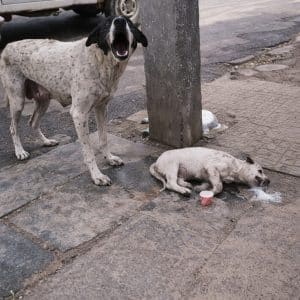
A Street Dog Carrying an Invisible Weight
Zhuzha was about two years old.
She had lived on the streets long enough to learn how to move quietly between traffic and sidewalks. There was a small mark on her ear — a sign she had once been sterilized and released back outside.
But something was wrong.
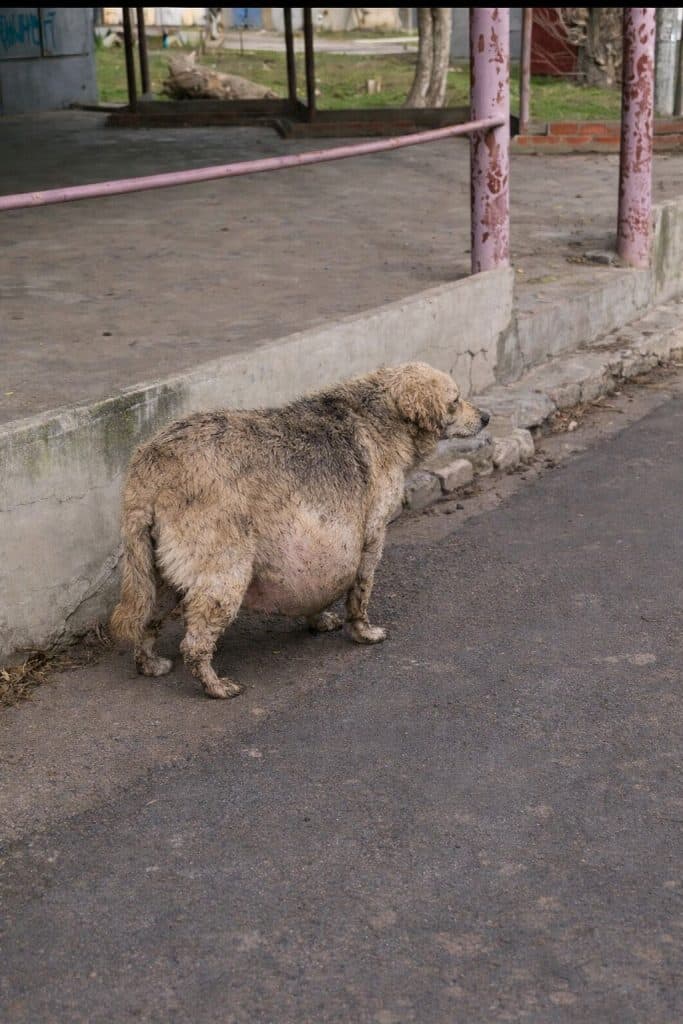
For months, her belly had grown larger and larger. At first, it may have looked like pregnancy. Then swelling. Then something far more serious.
She walked slowly, as if each step required effort. Her breathing was heavy. Her eyes looked tired in a way that had nothing to do with sleep.
She wasn’t aggressive.
She wasn’t loud.
She was simply struggling.
And without intervention, she would not have survived much longer.
When Volunteers Chose to Look Closer
Concerned volunteers brought Zhuzha to a veterinary clinic.
Blood tests were performed.
Her heart was examined.
Imaging revealed the truth.
Zhuzha was infected with heartworms — a condition known as dirofilariasis. Because her heart could not function properly, fluid had accumulated inside her abdomen. The severe swelling was not fat or food.
It was ascites — dangerous fluid buildup caused by heart failure.
The diagnosis was serious.
Without treatment, her organs would continue to suffer. Time was limited.
Video: Over 10 Liters of Fluid Removed — Watch Zhuzha Walk Lightly Again
A Delicate and Life-Saving Procedure
The veterinary team prepared for immediate intervention.
A controlled procedure was performed to drain the excess fluid from her abdomen. Carefully, steadily, they removed more than 10 liters of fluid from her small body.
Ten liters.
The relief was visible almost immediately. Her breathing eased. The pressure inside her abdomen reduced. But the battle was not over.
Zhuzha remained at the clinic for continued monitoring. She began heart-support medication and targeted treatment for the heartworm infection. Recovery would require patience, consistency, and careful management.
There were no quick solutions.
Only steady care.
Ten Days Later — A New Light in Her Eyes
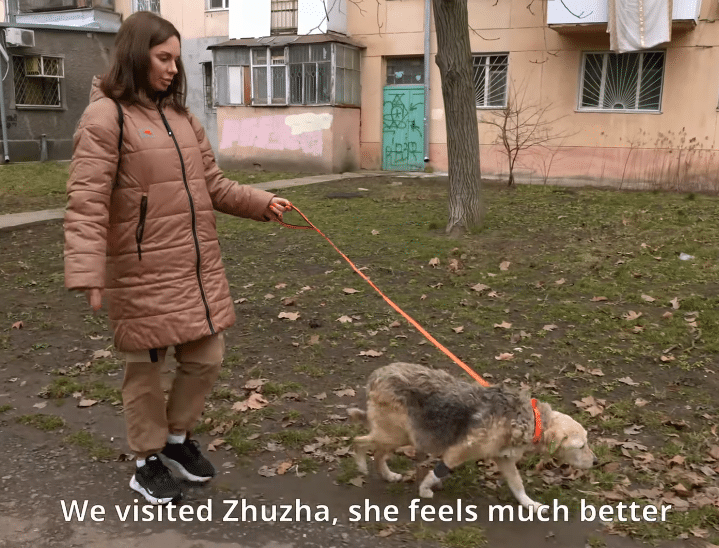
After ten days, subtle changes appeared.
Zhuzha began to walk slowly on a leash outside the clinic. Her appetite improved. Her posture straightened. Her tail, once still, moved gently when she recognized familiar voices.
She looked lighter — not only physically, but emotionally.
The heavy weight she had carried for months was gone.
She was no longer dragging her body forward.
She was stepping into possibility.
Four Weeks — Leaving the Clinic Behind
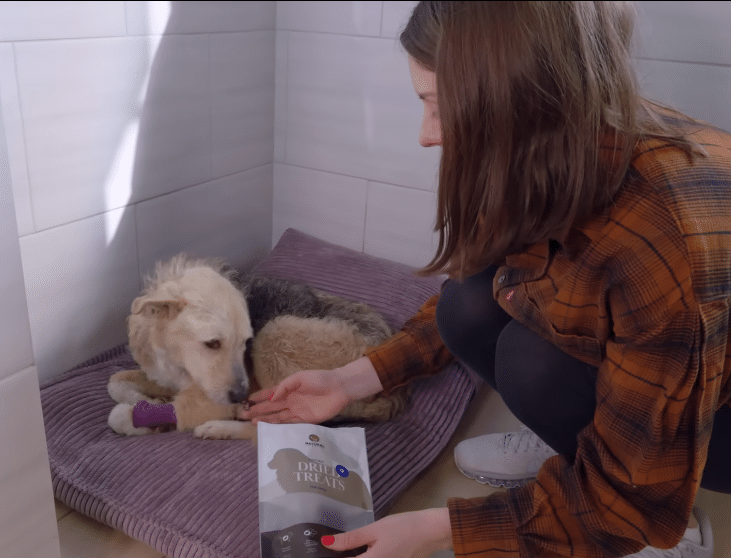
Four weeks after the procedure, Zhuzha was well enough to leave the clinic.
Her swollen belly had disappeared completely. She moved freely without strain. She was introduced to other dogs in her rescuer’s home, and cautiously, then happily, began interacting with them.
She rested comfortably.
She ate with enthusiasm.
She walked without gasping for air.
She still required lifelong heart medication — but she had gained something more important:
Time.
And quality of life.
A Life Once Narrowed by Illness — Now Open Again
Today, Zhuzha runs in the park.
She explores the grass with curiosity. She greets people gently. She waits patiently for her permanent family while enjoying safety in foster care.
Her body bears no visible trace of the 10 liters of fluid she once carried. But her story carries weight in a different way.
Heartworm disease is silent.
Ascites builds slowly.
Street dogs rarely receive early diagnosis.
Zhuzha survived because someone noticed.
Because volunteers acted.
Because veterinary care was made possible through support.
Her journey reminds us that even small contributions — time, resources, attention — can change the course of a life.
Zhuzha may always need heart medication.
But she no longer walks alone with a burden no one understands.
She walks lightly.
And she waits — not for survival anymore — but for a forever home filled with love.