A Body Carrying Old Injuries
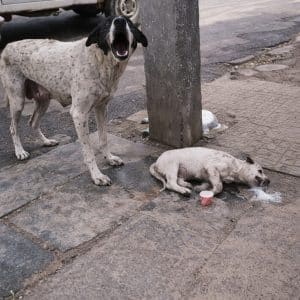
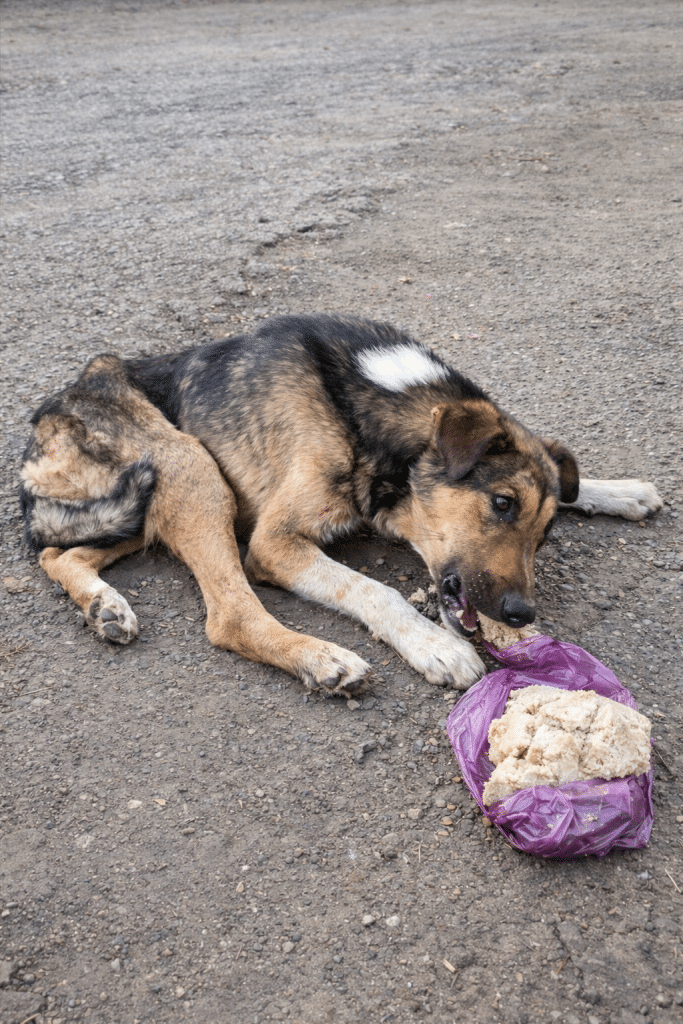
When Bruno was first seen, it was clear that life had not been gentle with him. He moved slowly along the roadside, his body painfully thin, each step uneven and uncertain. One of his legs no longer worked, forcing him to drag himself forward just to search for food.
Every sound made him tense.
Every passing human made him flinch.
Survival had taught Bruno to stay quiet, alert, and cautious at all times. No one knew how long he had been living this way. What was clear was that his body had been carrying pain for far too long.
Allowing Help, Without Trust
When rescuers finally reached him, Bruno did not resist—but he did not trust either. His eyes reflected a dog who had learned to expect disappointment. He was weak, frightened, and exhausted.
Still, he allowed himself to be carried to safety, as if some small part of him hoped this moment might be different.
The Diagnosis That Changed Everything
Bruno was transported to Moscow for medical care, where veterinarians uncovered the full extent of his injuries. His pelvis had been fractured months earlier. Severe nerve damage had left one leg without sensation.
The injury was old—nearly four months—and the damage could not be reversed. There was no way to save the leg.
A Decision Made for His Future
The choice to proceed with surgery was not easy, but it was necessary. Amputation was the only way to free Bruno from constant pain and give him a chance at a life without suffering.
Video: Bruno’s Journey From Pain to a Second Chance
The surgery was successful. The physical pain eased—but emotionally, Bruno retreated inward.
When Healing Took More Than Medicine
After the operation, Bruno refused food. He lay still, distant and silent, unsure whether life was worth engaging with again. Losing a limb was not just a physical change—it was a shock his spirit struggled to process.
But healing rarely happens all at once.
Caregivers stayed close without pressure. They spoke softly. They waited. They allowed Bruno to move forward at his own pace. Slowly, almost imperceptibly, something shifted.
He began to eat again.
He lifted his head when someone entered the room.
One day, his tail moved—just slightly—but enough to change everything.
Learning to Move in a New Way
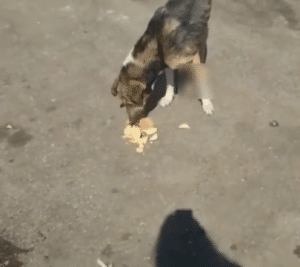
As his strength returned, Bruno was transferred to a rehabilitation center to learn how to move with three legs. The process was challenging, but Bruno surprised everyone. He practiced daily, pushing himself carefully but steadily.
With each small success, his confidence grew. He learned that his body, though changed, was still capable. He learned that hands could heal instead of harm. And most importantly, he learned that he was no longer alone.
Doctors and staff quickly grew attached to him, drawn to his gentle nature and quiet determination.
Seventy-Five Days to a New Beginning
After seventy-five days of care, Bruno was ready to leave.
The frightened dog who once dragged himself along the road was gone. In his place stood a dog who moved confidently, played with other dogs, and greeted the world with calm curiosity. His posture changed. His eyes softened. His trust returned.
A Life Defined by What Remains
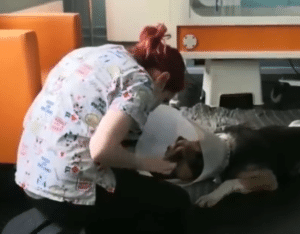
Today, Bruno lives safely with a family who sees him not for what he lost, but for who he is. He is joyful, secure, and deeply loved.
Bruno’s journey is a reminder that recovery is not only about healing the body. It is about restoring dignity, rebuilding trust, and allowing hope to return—slowly, patiently, and without conditions.
Even after loss.
Even after pain.
A new beginning is always possible.