It began in a narrow alley.
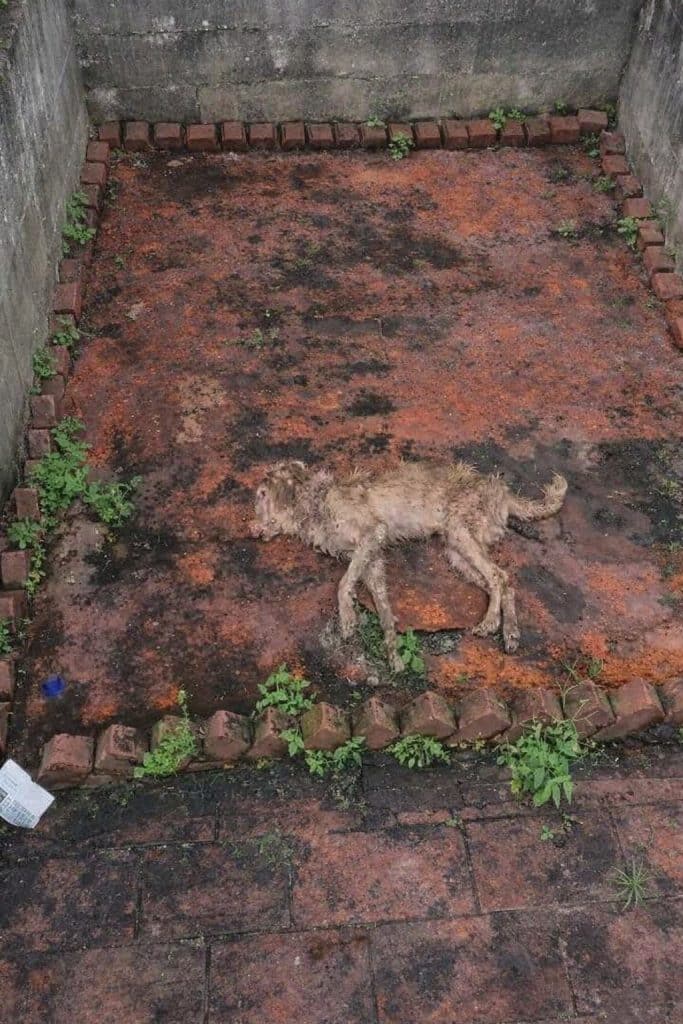
A yellow dog lay on the cold ground, his body trembling violently. His name was León.
He wasn’t just shaking.
He was seizing.
His legs jerked uncontrollably. Foam gathered at the edge of his mouth. When rescuers from Defensores de Animales approached and gently touched him, there was no awareness in his eyes — only a body trapped in relentless convulsions.
He didn’t respond to voices.
He didn’t react to movement.
Only the trembling continued.
When they lifted him to carry him to the car, León let out a heartbreaking cry — a sound so raw it pierced through the noise of the street.
It was pain.
It was fear.
It was a plea.
Wrapped carefully in a pad, he was rushed to the veterinary clinic — time slipping through their fingers.
Video: Starving, Seizing, and Left Behind — León’s Fight Back to Life
The seizures didn’t stop when they arrived.
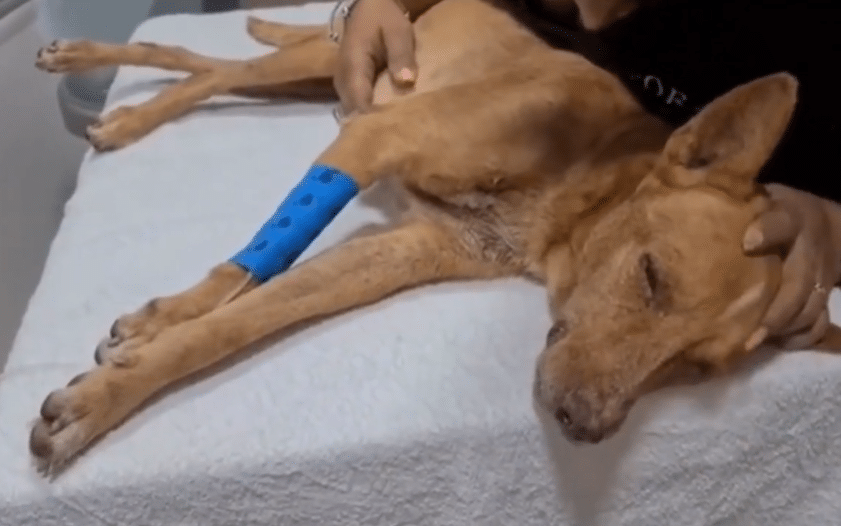
On the examination table, León’s body continued to convulse. Veterinarians had to gently restrain him to prevent further injury.
A high dose of Diazepam was administered immediately to break the seizure cycle. IV fluids followed to combat severe dehydration.
As the team worked, they assessed his fragile body.
León was not a young dog.
Based on his nearly toothless mouth, they estimated he was nine to ten years old. His frame was skeletal, his muscles wasted, his coat dull and thin.
Emergency tests were performed — screening for Distemper, full blood panels, biochemistry analysis, and abdominal ultrasound.
The rescuers waited.
The Hidden Pain Inside
The ultrasound revealed extensive inflammation in multiple internal organs. León was in severe, unrelenting pain.
Strong intravenous pain medication — including Tramadol and Buscapin — was administered to stabilize him.
There was also suspicion of poisoning. Antidotes were given as a precaution.
Fortunately, the Distemper test came back negative.
But the true heartbreak was still to come.
What Hunger Had Forced Him to Do
Soon after stabilization, León began vomiting violently.
There was no food in his stomach.
Instead, pieces of leaves.
Fabric fragments.
Plastic.
Small stones.
An X-ray confirmed what the vomiting had revealed.
His stomach was filled with gravel.
León had been starving for so long that he had eaten whatever he could find on the street — not to survive comfortably, but simply to survive at all.
This was not illness alone.
This was neglect.
He had been abandoned and left to fend for himself until his body could no longer endure it.
Holding On Through the Darkness
The days that followed were uncertain.
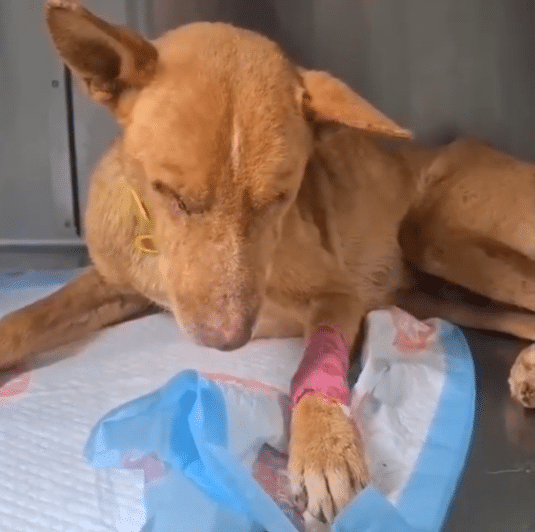
León lay weak, wrapped in bandages, IV lines running into his frail legs. There were moments when his eyes seemed distant — tired beyond measure.
But he was never alone.
The rescue team stayed by his side.
They stroked his head.
They whispered encouragement.
They promised him they would not give up.
Gradually, the seizures stopped.
His breathing steadied.
His eyes began to focus again — faint recognition returning.
He was still painfully thin. Still fragile. But he was present.
The First Step Back to Life
Then came the moment no one dared to expect too soon.
León tried to rise.
His legs trembled under his weight. He wobbled, nearly collapsing. But he pushed again.
And this time — he stood.
Not perfectly.
Not steadily.
But he stood.
It was a small movement in the grand scheme of things.
Yet for León, it was monumental.
He had gone from seizing in a dark alley to reclaiming his balance on four unsteady legs.
Hope Is Not a Weak Thing
León has begun eating properly again. He recognizes the voices of those who care for him. His body is still healing, but his will is undeniable.
His story is not simply about medical intervention.
It is about endurance.
About a senior dog who survived abandonment, starvation, and unimaginable pain — and still chose to fight.
The video closes with a simple message:
Never give up on a life.
Because sometimes, the smallest step — taken on trembling legs — is the loudest declaration of hope.